Y aquí se encuentra el femenino:
sábado, 19 de agosto de 2017
Los Organos Reproductores y sus Partes!
En la clase de Salud y Adolescencia se nos pidió que buscáramos información sobre los órganos reproductores, tanto masculinos como femeninos. Aquí esta el masculino:

Y aquí se encuentra el femenino:
jueves, 17 de agosto de 2017
El cuidarse, esta en nosotros.
![]() |
| (Afiche de una campaña de salud) |
1) Listen las ideas y/o palabras que muestra este mashup.
RESPUESTA: cuidar, prevenir, pandemia, protección, le puede pasar a cualquiera, responsabilidad, riesgos, expuesto, enfermedad, VIH, chequeos.
2) Expliquen con sus palabras el significado del título del afiche.
RESPUESTA: El título hace referencia a que nosotros podemos decidir el tener o no, relaciones sexuales responsablemente. En pensarlo bien y estar consciente de los riesgos.
Luego de esto, escribimos un texto que articulara o resumiera todas las palabras y/o respuestas anteriores:
Cada vez que una persona decide tener relaciones sexuales con otra persona, debe estar consciente de lo que está pasando y lo que podría ocurrir. Por eso, para no correr tales riesgos, ambos deberían cuidarse, no solo uno sino los dos. En caso de que ambas personas decidan tener un bebé, primero tienen que saber de la responsabilidad que conlleva tener un hijo. Y si creen que tienen la madurez y el tiempo suficiente (sin mencionar los gastos económicos), pues genial. Ahora, las personas que aún son muy jóvenes o que simplemente no desean un hijo, siempre deben estar informados sobre todos los riesgos posibles y todas las maneras de cuidarse. Recalcar, que no es suficiente que uno solo se cuide, es preferible que ambos lo hagan. También, el afiche nos recomienda el hacernos chequeos de VIH para comprobar si poseemos SIDA. Estos test no son obligatorios, es decir que uno va por voluntad. Pero en caso que le diagnostiquen SIDA, podrá recibir una ayuda médica más temprana para poder tener una mejor calidad de vida. Y en caso de que no, pues simplemente se saca un peso de encima.
Y para finalizar, realizamos una "word cloud" de dicho texto, en mi caso, utilizando la pagina de Jason Davies para realizar este tipo de word clouds.
Los Hidratos de Carbono
En clase nos separamos en grupos y cada uno tenia que buscar información y realizar una presentación sobre las proteínas, los lipidos, y en mi caso, los hidratos de carbono (o carbohidratos).
sábado, 1 de julio de 2017
The Water Cycle
Here there is kind of a summery I made about the water cycle: It’s definition, how it happens and what is the problem that’s affecting this process.
The hydrological cycle, better known as the water cycle, is the process that recycles water and nutrients. It’s the continuous exchange of water between land and water-bodies.
It begins when water from differents places (oceans, rivers, lakes, ponds, puddles, etc) evaporates going up to the sky and formed into clouds while being cooled. So once clouds are filled with more water, precipitation occurs, and waters comes back (in form of rain, ice, sleet or snow) And now just 2 things can happen: Water could become part of the ground, flowing into oceans or lakes by rivers and streams. Or it just could go back up to the atmosphere and the cycle begins again.
It is very important for this to occur because it gives fresh water to every living being in the world. Approximately 97% of the earth’s water is stored in the oceans, and only a fraction of the remaining portion is usable freshwater. So if the urbanization alter the natural amount of water that should go into ocean and lakes, the consequences could be a decrease in the volume of water that percolates into the ground and in the quality of water as well. These type of hydrological changes actually ARE having significant implications for the quantity of clean and fresh water that is available for the use of humans and wildlife.
The hydrological cycle, better known as the water cycle, is the process that recycles water and nutrients. It’s the continuous exchange of water between land and water-bodies.
It begins when water from differents places (oceans, rivers, lakes, ponds, puddles, etc) evaporates going up to the sky and formed into clouds while being cooled. So once clouds are filled with more water, precipitation occurs, and waters comes back (in form of rain, ice, sleet or snow) And now just 2 things can happen: Water could become part of the ground, flowing into oceans or lakes by rivers and streams. Or it just could go back up to the atmosphere and the cycle begins again.
It is very important for this to occur because it gives fresh water to every living being in the world. Approximately 97% of the earth’s water is stored in the oceans, and only a fraction of the remaining portion is usable freshwater. So if the urbanization alter the natural amount of water that should go into ocean and lakes, the consequences could be a decrease in the volume of water that percolates into the ground and in the quality of water as well. These type of hydrological changes actually ARE having significant implications for the quantity of clean and fresh water that is available for the use of humans and wildlife.
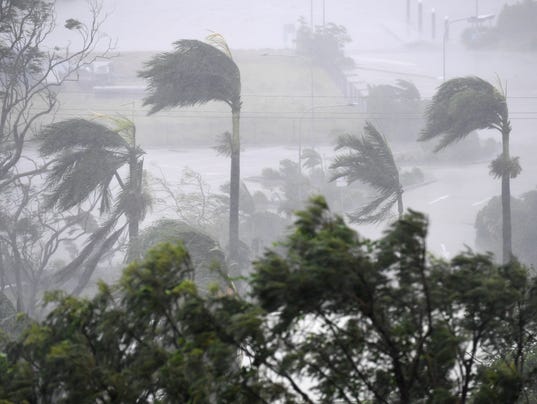
Australia’s Cyclone
Almost a month ago, a powerful cyclone threatened northern Australia, damaging homes, wrecking jetties and cutting power to thousands of people. Despite issuing evacuation orders, police told Reuters they were not sure how many people had heeded their advice the day before (Monday 27th) Although only about 400 people went to cyclone shelters as the winds gathered strength, making it more dangerous, it could have been the biggest evacuation seen in Australia since Cyclone Tracy devastated the northern city of Darwin on Christmas Day, 1974. Townsville airport was closed and airlines Qantas, Jetstar, Rex and Virgin Australia cancelled several flights. Authorities said it was too dangerous to venture outside and risk to receive damage. Emergency response crews were also sheltered until the storm finished. The wind gusts were stronger than 260 km per hour confirming that it was a category 4. Also the torrential rain flooded streets and wind smashed windows, uprooted trees and tossed debris through streets, cutting roads and leaving residents climbing into roofs and floating down streets in boats. All this happened during March 27th and 31st.
martes, 6 de junio de 2017
Un huevo como celula
Esta vez les traigo una actividad interesante que hicimos en clase. Nuestra profesora de biología, nos dijo que debíamos colocar un huevo en vinagre durante 3 días para que después se le desprendiera la cascara y quedara de esta forma.
![]() |
| (El huevo luego de haber estado 3 días en vinagre y sin su cascara) |
Así el huevo representaría lo que es la membrana de una célula. Para iniciar el experimento, sumergimos el huevo en agua y observamos que pasaba. Ahora, el huevo se encontraba mas suave, grande y redondo. Esto se debía a que había entrado liquido dentro de este, por medio del proceso de asimilación. Entonces, para confirmar esto, tuvimos que poner el huevo dentro de un tapper y bañarlo en azúcar por 20 minutos. Luego de eso, el azúcar se encontraba húmeda, debido a que el ambiente en el que se encontraba el huevo era un ambiente hipertónico en el que se genero el proceso de ósmosis. El huevo tuvo que liberar agua porque había mucho soluto y poco solvente.
Finalmente, para concluir el experimento hicimos una ultima prueba: Volvimos a colocar el huevo en agua y ocurrió lo mismo que antes. Este se agrandó debido al agua que absorbió.
Entonces, en resumen, primero el huevo absorbió agua y se hinchó. Luego al bañarlo en azúcar, este libero cierta cantidad de liquido y se achicó. Y a lo ultimo, volvimos a hacer lo mismo que al principio, y se volvió a agrandar.
La Celula simplificada
Aquí les dejo una infografia que nos muestra el concepto básico de "Célula", aparte de las diferencias y semejanzas entre Procariota y Eucariota, y también un poco sobre el Metabolismo:
600x600 de Gomez Gamer
Suscribirse a:
Entradas (Atom)


